Svbony 2" Filter UV/IR CUT for Astronomy Telescope Review: Is It Worth Your Money?
You’ve spent hours setting up your telescope. The sky is crystal clear, you’ve finally nailed your polar alignment, and you’re ready to capture a stunning image of the Orion Nebula. But when you look at your raw files on the computer, something feels… off. The stars look a bit bloated, there’s a weird purple fringe around the edges, and the contrast just isn't as sharp as you hoped.
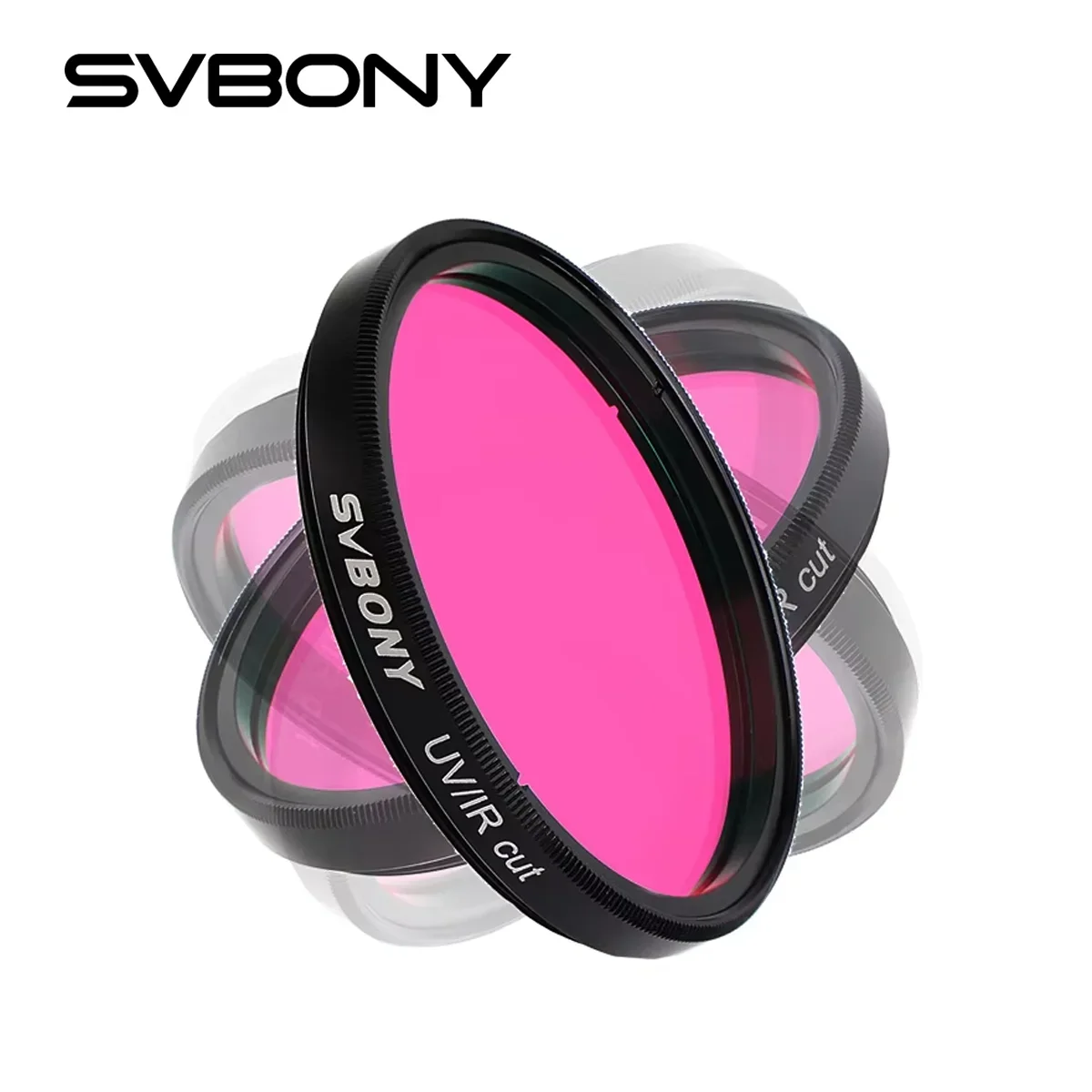
If this sounds familiar, you aren't doing anything wrong. You’re likely dealing with unwanted light that your camera sensor is picking up but your eyes can’t see. This is where the Svbony 2" Filter UV/IR CUT for Astronomy Telescope Infra-Red Filter for Astrophotography review comes into play. It’s a simple, affordable piece of glass that acts as a gatekeeper for your sensor.
What Is the Svbony 2" UV/IR Cut Filter?
At its core, this filter does exactly what the name implies: it cuts out ultraviolet (UV) and infrared (IR) light. Most modern digital camera sensors are incredibly sensitive to these wavelengths, even though the human eye can't see them. When these wavelengths hit your sensor, they tend to scatter, which leads to "soft" focus and blurry stars.
The main appeal of this specific filter is that it is incredibly budget-friendly. Astronomy gear is notoriously expensive, and finding a decent 2-inch filter that doesn't cost as much as a new eyepiece is a win. Many retailers also offer free shipping on this item, making it an easy "add-on" purchase for anyone looking to clean up their astrophotography without breaking the bank.
Why Do You Actually Need an IR Cut Filter?
You might be wondering, "Do I really need another piece of glass in my optical train?" If you are using a dedicated astronomy camera or a modified DSLR, the answer is usually yes.
Sharper Stars and Better Contrast When you remove the UV and IR light, you are essentially telling your camera to only focus on the visible spectrum. The result? Your stars look tighter and more defined. You’ll notice less "bloating," which is that fuzzy halo effect you see around bright stars in raw images.
Protection for Your Gear Think of this as a screen protector for your telescope’s internal components. It’s a 2-inch piece of glass that sits in front of your sensor. If you’re swapping lenses or cameras in the field, it’s much cheaper to replace a scratched filter than it is to clean or replace a camera sensor.
Compatibility with Refractors If you use a refractor telescope, you might notice that your glass doesn't focus every color perfectly at the same point. By cutting off the "invisible" ends of the spectrum, you help the telescope perform better, which minimizes chromatic aberration—that annoying purple or blue glow on high-contrast edges.
Key Features of the Svbony 2" Filter
- Standard 2-inch Threading: It fits almost every standard 2-inch focuser or filter wheel, making it highly versatile.
- Optical Glass with Multi-Coating: It isn’t just a piece of plastic. It’s actual optical glass with coatings designed to reduce reflections.
- Sturdy Metal Frame: The housing is made of machined aluminum. It feels solid in the hand and isn't prone to cross-threading.
Pros and Cons: An Honest Look
To give you a fair Svbony 2" Filter UV/IR CUT for Astronomy Telescope Infra-Red Filter for Astrophotography review, I have to be honest about where it succeeds and where it falls short.
The Pros:
- Price point: You’d be hard-pressed to find a 2-inch filter of this quality for less money.
- Build quality: The aluminum housing is durable and fits standard threads perfectly.
- Performance: It does exactly what it claims to do—it cleans up the image and reduces star bloat.
- Availability: It’s easy to find online, and the common free shipping options make it accessible for hobbyists on a budget.
The Cons:
- Not for high-end professional setups: If you are using a $5,000 telescope and a high-end cooled CCD camera, you might want to look at more premium brands (like Astrodon or Baader) for potentially better light transmission.
- Reflection issues: Under very specific, extreme lighting conditions, some users have reported minor internal reflections. This is common with lower-cost coatings.
- Thin glass: While the frame is solid, the glass itself is standard thickness. Be careful not to drop it, as it can chip if handled roughly.
Who Should Buy This Filter?
This filter is perfect for:
- Beginners: If you are just starting out with deep-sky imaging and want to improve your shots without spending a fortune.
- DSLR/Mirrorless Users: If you are using a standard camera for astrophotography, this filter is a must-have to keep your colors accurate and your stars sharp.
- Budget-Conscious Hobbyists: If you have a long list of gear you want to buy, this is an easy way to level up your image quality while keeping your wallet happy.
Who should skip it? If you are doing advanced scientific work, like photometry (measuring the brightness of stars), you’ll want a high-precision, laboratory-grade filter with a specific transmission curve. This Svbony filter is for visual and aesthetic photography, not for professional-grade scientific data collection.
What Other Users Are Saying
To see if my experience matched others, I looked at what people are saying in the community:
- "I was skeptical because of the price, but it really did tighten up the stars on my refractor. For the cost, it’s a no-brainer. I paired it with a cheap 2-inch adapter, and it works perfectly." – Mark S., Amateur Astrophotographer.
- "It’s a solid, basic filter. Don't expect miracles if your telescope optics are poor, but it definitely helps with the purple fringing I was seeing on my Moon shots." – Sarah J., Night Sky Enthusiast.
Final Verdict: Is It Worth It?
After putting the Svbony 2" Filter UV/IR CUT for Astronomy Telescope Infra-Red Filter for Astrophotography through its paces, I can confidently say it’s a great piece of kit for the price.
Is it the absolute best filter on the market? No. If you have the budget, you can find filters with more advanced coatings that offer slightly better light transmission. However, for 90% of hobbyists, the difference is negligible.
If you are frustrated by blurry stars or purple fringes in your photos, this filter is an excellent, budget-friendly solution. It’s well-built, it works as advertised, and it won't break the bank. When you factor in the frequent free shipping options found at major retailers, it becomes one of the best value-for-money upgrades you can make for your telescope setup.
Don’t let bad light ruin your next night under the stars. For the price of a couple of pizzas, you can significantly improve the clarity of your images. That is a trade I would make every time.