RP2040-Zero Review: Is This Tiny Microcontroller Worth Your Time?
We have all been there. You have a cool idea for a DIY electronics project—maybe a custom mechanical keyboard, a smart home sensor, or a little LED display—but then you look at the size of a standard Raspberry Pi Pico. It’s a bit bulky, right? Sometimes it just doesn’t fit into the tight space you have planned.
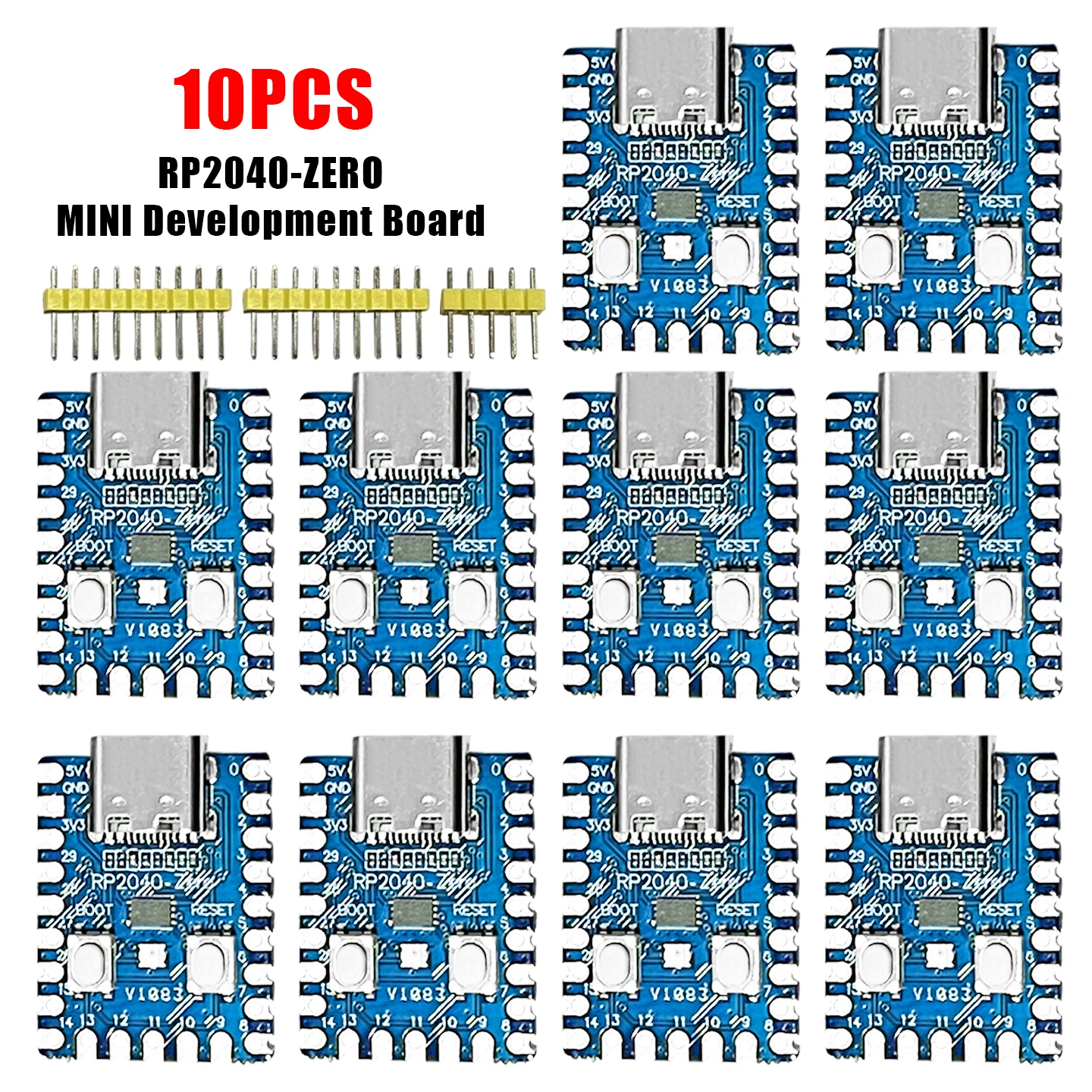
That is where the 1-10PCS RP2040-Zero RP2040 for Raspberry Pi Microcontroller PICO Development Board Dual-core Cortex M0+ Processor 2MB Flash XCW comes into play. It’s essentially a shrunk-down version of the classic Pico. But does being smaller mean you lose out on performance? Let’s break it down.
What is the RP2040-Zero and Why Should You Care?
If you are a fan of the Raspberry Pi Pico but wish it came in a "travel size," this is your answer. This board uses the exact same RP2040 chip as the original, meaning you get that snappy dual-core processing power in a package that is barely larger than a postage stamp.
The main appeal here is simple: it is budget-friendly and incredibly versatile. Whether you are buying a single board for a weekend hobby project or a pack of ten to stock up your workshop, the cost-to-performance ratio is hard to beat. Plus, many sellers offer free shipping on these, making it a low-risk purchase for anyone looking to experiment with embedded electronics.
Key Features and Real-World Benefits
Let’s look past the spec sheet and talk about what this board actually does for your projects.
The Power of the Dual-Core M0+ Processor Having a dual-core processor on such a tiny board is a big deal. In practice, this means you can have one core handling your main logic—like reading data from a sensor—while the other core manages background tasks, like updating a display or handling communication. You won’t get those annoying "stutters" in your code that you might see on simpler, single-core boards.
2MB of Flash Memory Even though the board is small, it has 2MB of onboard flash memory. For most hobbyist projects, this is plenty of room for your code (MicroPython or C/C++) and some extra data storage. You won't feel cramped unless you are trying to store massive image files or complex machine-learning models.
Compact Form Factor The "Zero" in the name isn't just a marketing gimmick. This board is designed to save space. If you are building a wearable device or a tiny smart-home gadget, the smaller footprint allows you to keep your project slim and professional-looking.
Versatile GPIO Pins Despite its size, the RP2040-Zero still offers plenty of pins to connect your sensors, buttons, and LEDs. It covers all the basics: I2C, SPI, and UART. If you know your way around a breadboard, you will find it very easy to integrate this into your existing setups.
Pros and Cons: A Realistic Look
No product is perfect. To provide an honest 1-10PCS RP2040-Zero RP2040 for Raspberry Pi Microcontroller PICO Development Board Dual-core Cortex M0+ Processor 2MB Flash XCW review, we need to look at both sides of the coin.
The Good
- Price: It is one of the most cost-effective ways to get into microcontrollers.
- Size: Perfect for space-constrained builds.
- Compatibility: Since it uses the RP2040 chip, it works with the massive ecosystem of Raspberry Pi software and tutorials.
- Ease of use: Programming in CircuitPython is a breeze for beginners.
The Bad
- Small Solder Pads: Because the board is so tiny, the pins are small. If you aren't great at soldering, you might find it a bit fiddly to attach headers.
- USB-C Port Durability: The USB-C connector is surface-mounted. If you are rough with your cables, there is a small risk of breaking the port off the board over time.
- No Built-in Wi-Fi/Bluetooth: You have to add external modules if you want your project to be wireless.
Who is the RP2040-Zero For?
You should buy this if:
- You are a hobbyist who loves building small, custom gadgets.
- You are comfortable with a soldering iron or are willing to learn.
- You want a cheap, reliable chip to test out code before moving to a bigger project.
- You are a student or educator looking for an affordable way to teach microcontrollers.
You should skip this if:
- You need built-in wireless connectivity (look for the Pico W instead).
- You have very shaky hands or limited experience with tiny electronics; a full-sized Pico might be less frustrating to start with.
- You need a board that is "plug-and-play" with a massive amount of pre-soldered headers.
What Do Users Think? (User Experiences)
To get a better idea of how this board performs in the real world, I looked at what other makers are saying.
- "The perfect size for my custom macro pad."
- "I bought the 5-pack to build macro pads for my office. The RP2040-Zero fits perfectly inside the 3D-printed case I designed. It’s fast, the software support is great, and I didn't have to worry about the board taking up too much room. Just be careful when soldering the wires—the pads are close together!" — Mark, DIY Enthusiast.
- "Great value, but treat the USB port with care."
- "I’ve used these for a few sensor projects. You really can’t beat the price, especially with the free shipping options I found. It’s a great little board, but I did manage to rip the USB-C port off one board because I was being too aggressive with the cable. Keep it stationary, and it’s a total win." — Sarah, Engineering Student.
Final Verdict: Is It Worth Your Money?
If you are looking for a reliable, budget-friendly microcontroller that packs a serious punch, the 1-10PCS RP2040-Zero RP2040 for Raspberry Pi Microcontroller PICO Development Board Dual-core Cortex M0+ Processor 2MB Flash XCW is an excellent choice.
It isn't perfect—the small size makes it a bit more challenging to solder, and you’ll need extra modules if you want wireless features—but for the price, it is hard to complain. It’s an incredibly efficient, powerful, and fun little board that gives you a lot of freedom for your projects.
Whether you are a beginner just starting your journey into electronics or a seasoned pro looking for a small brain for your next build, this board is a solid addition to your parts bin. Just remember to handle that USB-C port with a bit of care, and you’ll have a great time building with it.